Travel changes how you see the world. For Dr. Amir Kaki, it also changed how he sees patients.
His 11-year-old daughter’s passport is already stamped with Portugal, Saudi Arabia, and Sardinia. That’s intentional. Since their children were born, Amir and his wife have taken them abroad — not for tourism, but to raise “good citizens of the world.”
That instinct to seek exposure over familiarity shaped Amir long before he became a father. While many physicians complete their training at a single institution, he moved deliberately for each phase — from medical school in the Dominican Republic to residency, fellowship, and ultimately interventional training in New York. Each stop offered a different culture, a different philosophy. He took what worked and left the rest.
The pattern carried into his career. Amir travels internationally for clinical research, urges trainees to seek discomfort over convenience, and builds relationships across continents. When he eventually settled in Detroit, that outsider’s perspective became an advantage.
It allowed him to see promise in technologies others dismissed. To trust clinical judgment when evidence lagged behind patient need. To stand firm when critics questioned not just his methods, but his motives.
Today, as Associate Clinical Professor of Medicine at Wayne State University and Director of Mechanical Circulatory Support at Henry Ford St. John Hospital, Amir has built a career guided by a principle he learned early: always do right by the patient — regardless of the personal cost.
Sometimes the clearest perspective comes from refusing to see the world the way everyone else does.

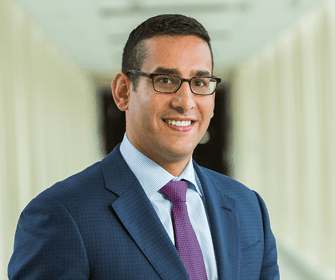

Meet The Specialist
Dr. Amir Kaki

Fast Take
Building Expertise Across the Cardiovascular Spectrum: Board certified across seven cardiovascular specialties, with training at four institutions in three countries, deliberately seeking diverse perspectives before establishing practice in Detroit.
Pioneering Mechanical Circulatory Support When Others Hesitated: Recognized Impella’s potential early, becoming a high-utilization outlier and advancing first-in-human work on the world’s smallest heart pump and related technologies.
Treating the Patients No One Else Would Touch: Focused on cardiogenic shock and surgical turndown patients, applying the best available tools when options were exhausted and evidence had yet to catch up.
Learning to Take Calculated Risks
Amir's father was a physician, and remains the biggest influence on his life.
From him, Amir learned a simple, uncompromising principle: do what’s right for the patient. That belief would be tested repeatedly over the course of his career.
At Lenox Hill Hospital, Amir trained under Dr. Gary Roubin, a pioneer who invented the first coronary stent and carotid embolic protection device. Roubin was known for adopting new technologies early — but never casually. “When he was innovating and doing new procedures, he still honored the scientific method,” Amir recalls.
The lesson stuck. You could push boundaries without being reckless — be first without abandoning rigor.
Early in his career, Amir pursued broad training across cardiology subspecialties, spanning interventional, imaging, and endovascular work. While his focus has since narrowed, that foundation remains essential. Echo skills inform the structural procedures he performs regularly. Endovascular expertise shapes his approach to complex coronary interventions. “To be a really good complex PCI operator, people don’t think of this, but you really need endovascular skills,” he says. “You’re dealing with the iliacs and femorals.”
In Detroit, he found his most consequential partnership.
Dr. Ted Schreiber shared the same uncompromising view of patient advocacy — and zero tolerance for half measures. “To this day, he’s had a huge impact on my view of the world when it comes to patients,” Amir says.
Their partnership operated on a simple rule: if they believed something was right for the patient, they did it — even when it came at a personal cost.
That willingness to absorb risk in service of conviction would define the next chapter of Amir’s career.
When Experience Outpaces Evidence
In the mid-2010s, Amir and Ted were seeing patients few others wanted to touch.
Cardiogenic shock cases with grim odds. High-risk PCI candidates surgeons had already turned away. For these patients, standard therapy offered little more than a slow decline.
Around that time, Amir began using Impella — the catheter-based microaxial heart pump developed by Abiomed — for a simple reason: it offered a chance where none had existed before.
The decision wasn’t strategic. It wasn’t academic. “We saw patients who were dying,” Amir says. “And we had a device that we believed could potentially improve their survival.”
They didn’t know they were outliers until Abiomed noticed.
“We were not academically renowned,” Amir says. “We were what I call blue-collar guys — just grinding every day, taking care of patients.”
They weren’t publishing papers or presenting at conferences. They were using the device because patients who otherwise would have died were surviving.
Abiomed initially reached out to collect registry data. That led to research, proctoring, and eventually first-in-human work with next-generation versions. But before any recognition came scrutiny.
Colleagues questioned their judgment. High-risk PCI, as a formal concept, barely existed. “If a surgeon turned you down, you were pretty much sent out to pasture,” Amir recalls.
The calculus, to Amir and Ted, was clear. “These people are going to die if we don’t do anything,” he says. “It wasn’t that we were being cowboys. These people were going to die if we don't do anything, so why not do the best that we can?”
They took surgical turndowns. They placed Impellas. They fixed arteries. The patients lived.
But some critics weren’t persuaded.
Responding to Skeptics
"In my early adoption of Impella, there were a lot of skeptics," Amir says.
Some of that skepticism was understandable. Physicians trained to value randomized trials and large datasets had legitimate concerns — the evidence simply wasn’t there yet. From a strict evidence-based medicine perspective, caution made sense.
The frustrating part was how easily firsthand clinical experience was dismissed. "You can't discount our experience,” he says, noting their observations didn’t neatly fit the academic framework at the time.
In academic medicine, there’s a word for observations like theirs: anecdotes. They sit at the bottom of the evidence pyramid — interesting, perhaps, but insufficient. But to Amir, those anecdotes mattered. Case after case, they were watching patients survive who historically would have died.
The debate itself didn’t bother him. What did was when skepticism crossed into accusation.
"That was what would bother us the most,” Amir says. "We believed we were doing the best for the patient, so we took our punches on the chin, and we kept going."
The framework for when to trust clinical judgment over incomplete evidence came down to this: when patients have no other options, when the alternative is death or miserable existence, you act on the best information you have.
"I'm not saying that we should always do things this way. I believe in evidence-based medicine," Amir notes. "But at the time, there was a paucity of evidence. Anecdotally, we felt we were saving lives."
Years later, the data arrived.
A decade after Amir and Ted began treating cardiogenic shock patients with mechanical circulatory support, the New England Journal of Medicine published the “DanGer Shock” trial — validating much of what they had been doing long before it was accepted.
"I'm happy and proud to say that it really vindicated a lot of things that Dr. Schreiber and I were doing — when it wasn't popular, when it wasn't mainstream," Amir says.
Some former critics came around. Others became collaborators. The debate faded.
What remained was the same reality Amir had witnessed all along: his patients lived.
Recognizing the Next Big Thing in Cardiovascular Tech: IVL
Impella wasn’t the last time Amir found himself early to a technology others would later embrace.
Within a few years, he began to see the same pattern forming around intravascular lithotripsy (IVL). Using acoustic pressure waves to fracture calcium, IVL was changing what was possible in calcified coronary disease — and it was doing so faster than previous innovations.
In Amir’s practice, the shift was decisive. He had previously relied heavily on atherectomy for calcified lesions. Today, its role is marginal. IVL became his default approach for the vast majority of cases involving calcium.
“IVL has really changed how we practice, and the paradigm is much different than it was just five years ago,” Amir notes. Though first-generation IVL has limitations, by and large, "it has become the first-line therapy for, I would say, the overwhelming majority of calcific lesions."
That change coincided with broader adoption of intravascular imaging. With imaging now standard in nearly every procedure he performs, Amir could see plaque characteristics angiography alone had missed — including calcium that fundamentally altered procedural strategy, even in cases once considered routine.
“IVL has really been a game changer in the world of PCI," he says, "not only complex PCI, but combined with imaging in regular cases.”
He sees the same trajectory emerging in peripheral arterial disease (PAD). Adoption in office-based labs has been slower, largely due to cost and reimbursement constraints. But clinically, the case is familiar. Atherectomy remains the standard for heavily calcified peripheral vessels, despite its risks. IVL fractures calcium without creating debris, making procedures safer and more efficient.
Having lived through one major shift in practice, Amir recognizes what early adoption looks like — and he’s comfortable doing it again.
The Only Metric That Counts
Amir’s north star has never changed — clinical excellence over career strategy.
Opportunities in innovation come through relationships — but those relationships are earned in the exam room. Partnering with device companies, he says, is “where you have an opportunity as a physician to really make an impact in the early development of technology.” But only after you’ve proven, case by case, that patients come first.
That instinct — shaped by years of seeking different perspectives rather than familiar ones — is what allows him to recognize opportunity without mistaking it for ambition.
There’s one principle he never compromises: “Never, ever forget that the focus of your work should be the interests of the patient.” Industry partners know it. Patients feel it.
Looking back, Amir wishes he’d savored medical school more. His mentor, Dr. Roubin, used to say, “Youth is wasted on the young.” He understands that now.
His practice will keep evolving. New technologies will come — some embraced early, others cautiously. And somewhere, a young physician watching him work will realize that the right path isn’t always the obvious one.
The patients lived. That’s what matters.
Rapid Fire Q&A With
Dr. Amir Kaki
What music is on repeat in your cath lab?
Fridays are Biggie, if things are going well. On busier days, it’s Eminem — hometown favorite. The best is Lose Yourself with Dr. Schreiber leading the room. He has surprisingly good dance moves.
If you could teach a class on one topic — not necessarily medicine — what would it be?
Introduction to Tennis 101. We play a lot as a family. I’m in a men’s league, I play with friends, and my daughter went undefeated in middle school tennis this year. My younger kids just started. It’s a sport you can play from childhood through old age, and I encourage everyone to try it.
What’s your favorite travel destination?
Personally, Portugal stands out — the Algarve in particular. The water, the food, the time with the kids — it was special. Professionally, Saudi Arabia surprised me. I attended TCT Middle East last year and realized how wrong my preconceptions of the country had been.