Some physicians choose a path focused on scientific discovery. Others devote themselves primarily to patient care. Dr. Farouc Jaffer spent his career refusing to choose between the two.
When he focused on medicine, he missed research. When he immersed himself in research, he missed patients. That tension pulled him from an MD to an MD-PhD, from molecular imaging research to interventional cardiology, from building an NIH-funded laboratory to pioneering complex percutaneous coronary intervention (PCI) at Massachusetts General Hospital.
It might look like divided attention on the surface, but Farouc wasn’t narrowing his focus — he was expanding the range of problems he could solve.
Today, he leads both a complex PCI program and a molecular imaging laboratory, working on challenges most interventionalists don’t yet have the tools to see. His current project involves developing catheters to detect inflammation at the molecular level. The first prototype was built in 2005. An NIH-funded first-in-human study for his latest version is scheduled for 2026.
The timeline would frustrate many. For Farouc, it reflects the reality of pursuing questions that sit at the edge of clinical practice — questions that require patience, persistence, and a long view.
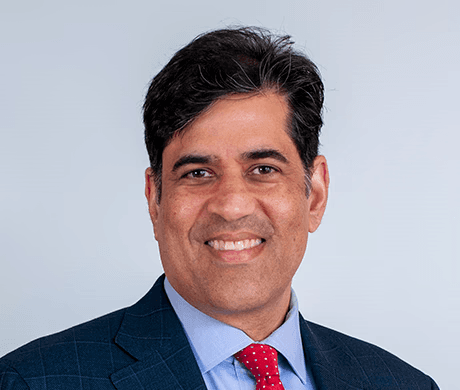

Meet The Specialist
Dr. Farouc Jaffer

Fast Take
Bridging Discovery and the Cath Lab: MD-PhD–trained physician-scientist leading both complex PCI and an NIH-funded molecular imaging lab, deliberately operating at the intersection of hands-on intervention and biological discovery.
Advancing Complex Coronary Intervention Through Capability, Not Convention: Helped build early chronic total occlusion (CTO) PCI expertise at MGH during a period when formal training pathways were still emerging, focused on expanding options for patients limited by evolving technical skill sets.
Reframing Risk Beyond Anatomy: Pioneering intravascular molecular imaging to visualize inflammatory biology inside coronary arteries, with the goal of moving secondary prevention from population averages toward individualized, biology-informed care.
From Mathematical Precision to Clinical Complexity
Farouc came to medicine from Stanford’s mathematical and computational sciences program, where problem-solving had clear structure and definitive answers. He was drawn to mathematics, computational sciences, operations research, and computer science at a moment when those fields were just beginning to intersect with medicine.
Medical school felt different — especially at the start. During his first semester, he struggled with the transition and briefly explored alternative graduate paths in operations research and medical informatics. As he later described it, there was “so much focus on volume and not as much as I would like on thinking.” Over time, that perception shifted as he became more involved with clinical patients, strengthening his commitment to medicine rather than pulling him away from it.
That trajectory led Farouc to the NIH as a Howard Hughes fellow — a highly selective research fellowship for physician-scientists — and ultimately to transition from a straight MD track to an MD-PhD, completing thesis work at the NIH and coursework at the University of Pennsylvania.
The same pattern shaped his move into cardiology. He gravitated toward interventional practice because it allowed for hands-on problem solving, while maintaining a research program that reinforced precision and rigor. At Massachusetts General Hospital, the first seven to 10 years of his career were devoted to building and sustaining an NIH-funded laboratory while performing the full range of complex PCI.
Farouc’s clinical and academic work is now anchored at Massachusetts General Hospital, where he serves as Director of Coronary Intervention and leads both the Chronic Total Occlusion (CTO) PCI Program and the CTO PCI Fellowship. He is also a Professor of Medicine at Harvard Medical School. In parallel with his interventional practice, he is a principal investigator in the MGH Cardiovascular Research Center, where his NIH-funded laboratory develops molecular imaging approaches aimed at identifying high-risk plaques and thrombus before they result in heart attack, stroke, or venous thrombosis.
Seeing Beyond Anatomy
While interventional cardiology has continued to refine what can be seen anatomically, Farouc has spent much of his career focused on what remains invisible.
Despite advances in technique and medical therapy, patients continue to experience recurrent events, with residual inflammation after stenting or acute myocardial infarction consistently linked to worse outcomes. Blood-based biomarkers such as high-sensitivity C-reactive protein capture systemic risk, but they do not localize disease within the coronary arteries themselves.
Farouc frames the limitation with a simple question: If you were screening for breast cancer, would you rely on a blood test — or would you get a mammogram?
Current intravascular tools excel at anatomy — vessel dimensions, plaque burden, calcium distribution, and stent optimization — but they do not capture the biological activity that drives future events.
“When patients leave the cath lab, we do not do a good job of telling them what their residual risk event rate is,” Farouc explains. Part of that limitation is technological: coronary plaques cannot be biopsied, and biology cannot be inferred from anatomy alone.
Adding Biology to Familiar Workflows
That gap motivated a different approach: intravascular molecular imaging.
Rather than replacing existing tools, molecular imaging adds a biological signal to workflows clinicians already know. An imaging agent is administered at the start of a PCI procedure and detected during a standard IVUS or OCT pullback, producing co-registered anatomical and biological data — what Farouc describes as “a two-for-one” acquisition.
In practice, this enables clinicians to:
Identify biologically active plaque that anatomy alone cannot distinguish
Better contextualize residual risk after treating a culprit lesion
Differentiate patients who may benefit from more aggressive secondary prevention
The concern isn’t just the artery that gets treated. Most repeat heart problems come from other diseased areas that aren’t addressed during the procedure. Even with the best available medications, about one in five patients will have another major cardiac event within four years — and that risk continues to increase over time.
Today’s prevention strategies rely on population averages. While shared targets for cholesterol, blood pressure, and blood sugar work broadly, they don’t reflect how much risk can still vary from one patient to another.
“If I told you your event rate was 20% versus 50%,” Farouc notes, “you might say maybe I should be doing something differently.” Molecular imaging offers a way to make those distinctions visible — informing decisions around lipid targets, anti-inflammatory therapies, clinical trial enrollment, or intensified follow-up.
From Procedural Insight to Risk Stratification
Farouc’s lab has pursued intravascular molecular imaging for decades. The first catheter capable of detecting fluorescence was built in 2005, but bringing the technology into clinical practice required advances in imaging tools already used in the cath lab.
Early benefits showed up during procedures. The added signal made certain complications easier to spot, such as when a stent didn’t fully cover the intended area or when problems occurred at the edges of a stent. The same approach has also been useful in more specialized situations, including rare vessel tears and monitoring inflammation in heart transplant patients.
Farouc sees these uses as early steps, with the larger opportunity lying in improving long-term risk assessment and prevention.
In 2026, an NIH-funded first-in-human study will evaluate an imaging agent designed to report on protease activity and inflammation using OCT as the catheter platform. If successful, the approach could allow clinicians to move beyond population averages toward individualized risk assessment.
The goal is not to complicate workflows, Farouc emphasizes, but to extend them. “Just acquire the information like you would doing a regular [IVUS or OCT] pullback.”
What 25 Years Taught Him About Innovation
After years working at the intersection of clinical practice and device development, Farouc has developed a clear view of where translation most often breaks down.
Moving an idea from early innovation to reliable manufacturing and first-in-human use requires navigating funding gaps, regulatory pathways, and technical iteration — a stretch sometimes referred to as the “valley of death.” For early-stage startups, that gap can be especially long.
“As an interventionalist, we want everything tomorrow,” Farouc says. But the reality is more complex. Bridging innovation to clinical use takes time, sustained support, and patience — particularly before experience, partnerships, and prior success begin to shorten the path.
His own work followed that arc. The science behind imaging inflammation inside blood vessels was understood early on, but the tools and systems needed to apply it to real patients took much longer to develop. Early versions proved the idea could work, but bringing it into practice required better imaging platforms, reliable manufacturing, and sustained funding. Support from the NIH, including SBIR grants, helped move the work through several critical stages.
He has also seen how physician-led ideas can stall when there isn’t an obvious, immediate use. Even strong concepts tend to gain traction faster when they have a clear starting point — a practical application that fits into existing clinical routines — while their longer-term impact continues to take shape.
That approach guided the development of molecular imaging. Early efforts focused on uses that could plug into current procedures, while longer-term work remained aimed at improving how clinicians assess risk and prevent future events. Investment from Canon Medical helped accelerate development of OCT-based fluorescence imaging, leading to early human studies in the U.S. and Japan.
Looking back, Farouc doesn’t frame the timeline as unusual — simply representative of what it takes to translate biological insight into tools that can be used reliably at scale. In his view, innovation moves forward most effectively when long-term vision is paired with practical steps that allow clinicians to engage early, without losing sight of where the work is ultimately headed.
Rapid Fire Q&A With
Dr. Farouc Jaffer
What’s on repeat in your cath lab?
I actually started the music initiative in the MGH cath lab. I’ve got a dedicated CTO playlist — about 50 songs — that I’ll put on for longer cases. I used to DJ years ago, so curating the music came naturally. The crowd favorites are Don’t Stop Believin’, Whatever It Takes, and Don’t Stop Me Now. They’re all tied to the work. When you’re doing CTOs, the music matters.
If you could teach a class on any topic — not necessarily medicine — what would it be?
Tennis, without question. I played in high school and a bit in college, and I really got back into it over the past five years. I play in a men’s league, with friends, and doubles with my kids. It’s a sport you can play your whole life. It’s technical, repetitive, and all about small adjustments — which I love.
What’s the single biggest thing you wish you’d known coming out of medical school?
That there isn’t one right path. Early on, I felt a lot of pressure to make the perfect decision — science or clinical medicine, research or practice. What I learned instead was to follow what I genuinely enjoyed at the time and where the opportunity was, even if it didn’t make sense in the moment. Things eventually tied back together, but not because I forced them.
If you could leave residents or fellows with one message, what would it be?
Despite everything going on in healthcare, taking care of patients is still the greatest gift we’re given. It’s a privilege to care for someone and their family. If you keep that centered — even when you can’t control reimbursement, policy, or external pressures — you’ll have a deeply fulfilling career. We really do make a difference in people’s lives.